
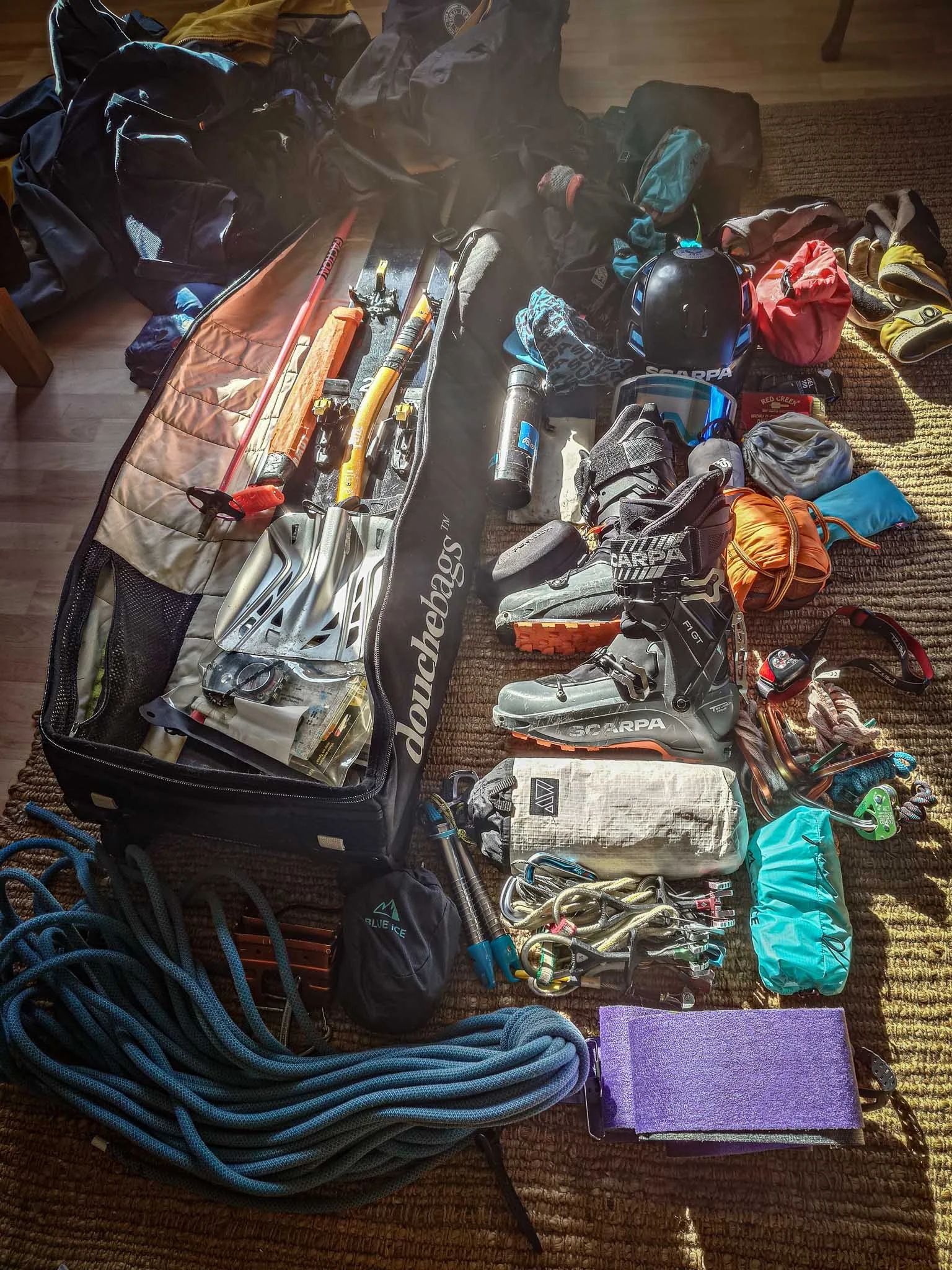
When you're ready to hit the mountain, there's nothing like the feeling of fresh air, fresh snow and the anticipation of good turns. But a good ski touring always starts with one thing:
proper packaging.
Having what you need – and no more – can be the difference between a magical day and an unnecessarily burdensome trip.
Here are our best tips on how to pack your backpack for a safe and efficient ski tour.
1. Choose the right bag
A 30–40 liter backpack is usually perfect for day trips on skis. Make sure it has:
Ski attachment (diagonal or A-beam)
Separate room for shovel and probe
Comfortable hip belt and sternum strap
Fastening before ice axe and crampons.
Pro tip: A backpack with a back opening or side opening is a real favorite. Tex Exped Icefall , or Ortovox Litric if you want an avalanche backpack. Personally, I like backpacks with a little bit of different compartments before storage.
Avalanche bag or not? It depends on the type of trip. If I'm going to do technical and long trips, I usually don't choose an avalanche bag. But if I'm going to go on a regular ski touring , which don't require as much equipment or technical skills, or where safety isn't as critical, I like to go with an avalanche backpack!
2. Safety equipment easily accessible
Transmitter/receiver (3-antenna avalanche transceiver!)
Shovel (not plastic…)
probe
Emergency transmitters (e.g. satellite phone, InReach or similar)
Test that everything works before you start the trip. The safety equipment is not for decoration – it is what allows us to travel safely in the mountains together. Remember to have batteries in your avalanche transceiver and preferably extra batteries in case you run out. Always be safe!
3. Technical equipment
Skis - choosing skis that suit the conditions. A touring ski should not be too heavy, and does not need to be too wide. A 99-100 mm waist is a good all-round ski in our opinion. For example, Faction Agent 2.0 or Faction La Machine Mini - we use these skis daily for all kinds of ski touring .
Ski boots – this is a world in itself. But find a shoe that provides a good balance for your type of skiing. There may not be one shoe that does everything best – we use the Scarpa 4 Quattro Pro and the Scarpa F1 LT, depending on the type of trip and function expected.
Binding – the same applies here, choose a binding that suits your type of style. Most people choose a binding that is too heavy – believe me, the lighter bindings hold up well nok for harder skiing than you can handle yourself. I only use ATK bindings myself (RT10 EVO and RT13-15 EVO).
skins – nothing glueless, poor quality. Choose skins that packs light and compact, and has good glide! Pomoca for the win!
ski-crampons – a must in Scandinavian mountains, always in your bag! (and preferably on the outside for easy access).
Ice axe and crampons – more on this in later posts, but often this can be the difference between reaching the top or not. Good safety equipment that doesn't need to be that heavy.
4. Clothes
Layering is the key:
Wool inside – keeps you warm even when you sweat. Aclima lightwool , preferably with a hood, is a favorite!
Light insulation – down or synthetic jacket for breaks. Warmth/thickness depending on time of year.
Midlayer – here I often use a vest, or a thin technical wool sweater.
Shell or softshell jacket and pants – protects against wind and snow
Extra gloves and hat – small but important details
Before the hike up, I use, for example, Hestra Ergo Grip Vector , and sometimes something thinner if it's hot outside.
Before the trip down I have my clear favorite: Hestra Alpha
Cap
Buff and hood
Before warm spring days, it is a good idea to wear a light, thin windbreaker before the hike up.
Tip: Pack so that you can easily get what you need without emptying your entire bag.
5. Food and drink
Snacks you actually crave (wraps, nuts, chocolate, slices of bread)?
Thermos with hot drink (hot juice with ginger!!!)
Water if necessary. But max 2 liters total with a thermos.
Remember: you walk better when you eat often, so it's good to have some snacks readily available.
6. The little things that make a big difference
Sunglasses and sunscreen (not always necessary then!..)
First aid kit (more on this in a later post).
Multi-tool and repair kit.
Headlamp
Maps, compass and GPS
Windsock
These are the details that often save the day when the weather turns or the break becomes long.
Summary packing list: download here
Skis with touring bindings. Recommended "Tech bindings"
Skins adapted to the skis, not "glueless" skins
Ski poles
ski-crampons
Peak hiking boots (with walking mode)
Backpack, approx. 30L with ski attachment
Ski goggles
Sunglasses category 3-4
Gore-tex® or similar breathable shell jacket with hood/softshell
Gore-tex® or similar breathable shell pants/Softshell
1 set of thermal underwear, top and bottom
1 pair of ski socks
Midlayer (down, fleece or similar)
Thinner gloves (for hiking uphill)
Thicker gloves (for downhill skiing)
Hat and cap or buff
Puffer jacket: primaloft or down, small nok to have in the bag
OTHER
2 x ski straps ("Voilé straps")
Sunscreen with minimum SPF 30
Water bottle/thermos approx. 1 liter
Personal medications, tape to prevent chafing
PERSONAL SAFETY EQUIPMENT
Transmitter/receiver (3 antennas) with new batteries
Snow shovel (metal)
probe (at least 2.4m)
Helmet
More advanced - ice axe, crampons and harness.

