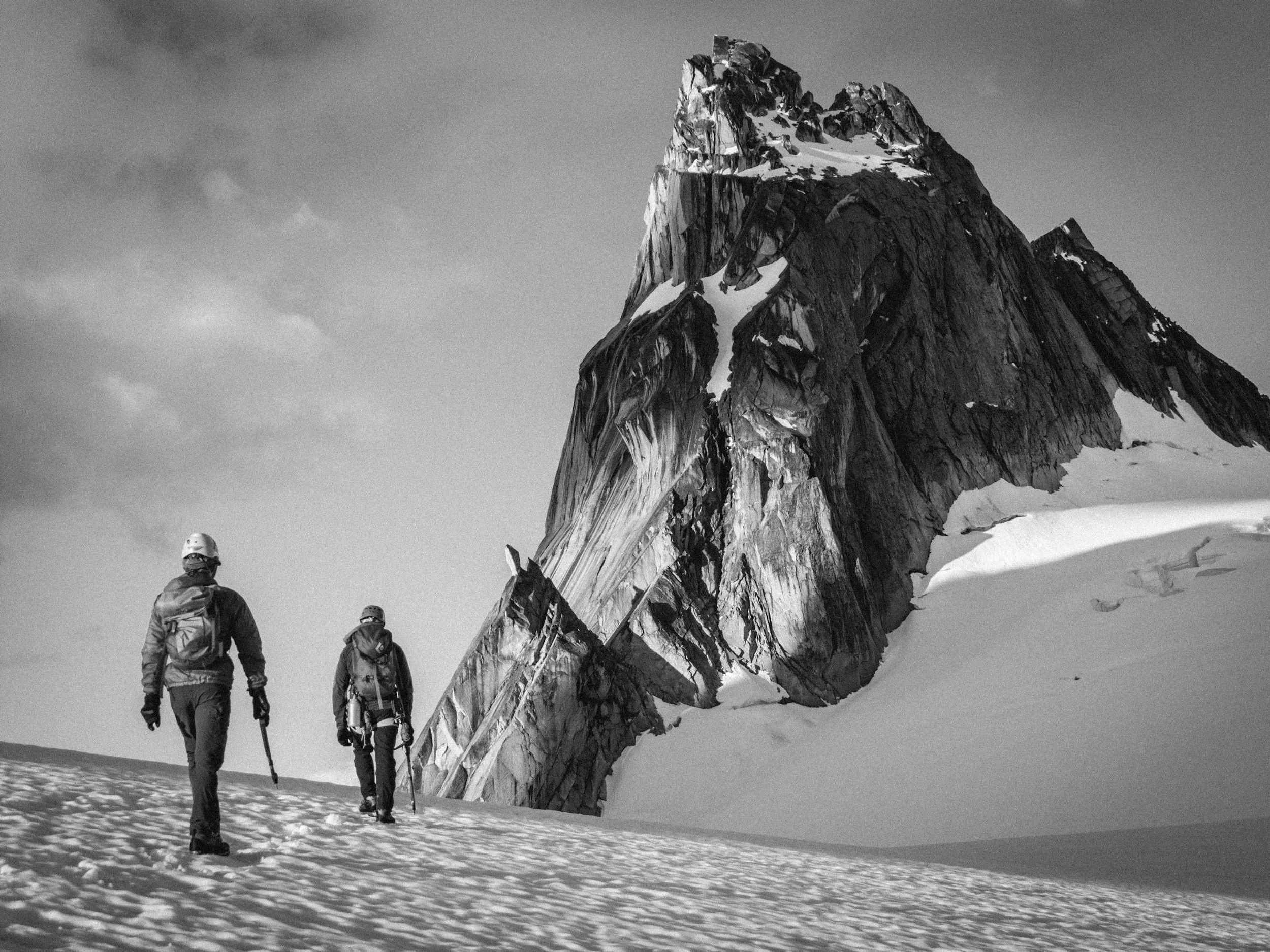
Our calling.
As internationally certified mountain guides (IFMGA/UIAGM/IVBV), we belong to a profession that has undergone one of the world's most comprehensive educations in mountaineering.
Becoming a guide requires many years of experience in climbing, glaciers, skiing, and alpine tours. The education itself extends over several years and contains both practical and theoretical modules in:
Alpine climbing and ice climbing – techniques, belaying, route selection, and rescue.
Glacier hiking and icefall – rope travel, safety on ice, and knowledge of crevasses.
ski touring and skiing – safe travel in avalanche terrain, assessment of snow and weather conditions.
Risk management – decision-making under pressure, assessment of group dynamics and safety.
First aid and rescue – medical preparedness, buddy rescue, and emergency situations.
An IFMGA guide is therefore not just a "tour leader" but a highly educated professional with in-depth expertise in taking responsibility for the safety of others in demanding mountain environments.
Read more about the education and the profession here: ifmga.info and here about the education.
Participant's responsibility
Risk
By participating in a trip with Tindekompaniet Do you acknowledge that mountain sports involve risk? The guide is responsible for practicing his profession in a professional and responsible manner, but cannot be held liable for incidents that fall within the inherent risk of mountain sports, unless it is due to gross negligence.
Sign a self-declaration before selected activity: Self-declaration skiing , self-declaration climbing
Follow instructions
You are obliged to follow all safety instructions and decisions from the guide, even if this means changing or canceling the tour.
Failure to comply may result in you being removed from the tour without the right to a refund.Equipment and clothing
You are responsible for providing the necessary personal equipment and clothing, unless otherwise agreed.
Mandatory safety equipment (helmet, harness, avalanche transceiver, etc.) must always be used where applicable.
Health and fitness
You are responsible for being in sufficient physical condition for the activity.
You are obliged to inform the guide about any health conditions, injuries, illnesses, or anything else that may affect safety.
Group safety
You commit to acting responsibly and contributing to the group's overall safety.
Risky behavior that puts yourself or others in danger is not accepted.